Tracing Decision Tree Refinements Against Aggregated Platform Metrics for Extended Capital Stability
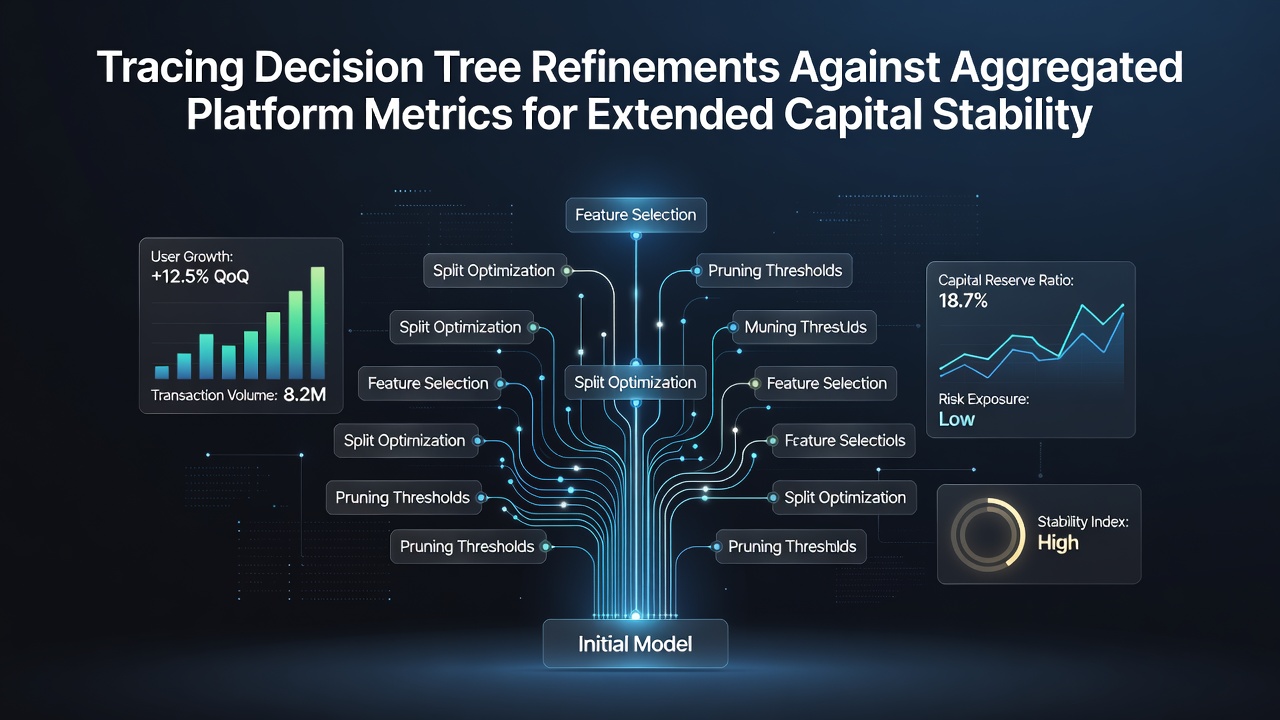
Decision tree models have gained traction in financial technology environments where operators seek to balance immediate performance indicators with longer-term capital requirements, and refinements occur when these models are tested against broad sets of aggregated platform data that capture user behavior, transaction flows, and risk exposure across multiple jurisdictions.
Core Components of Decision Tree Applications in Platform Environments
Decision trees function by splitting datasets into branches based on conditional rules that isolate variables such as transaction velocity, account age distributions, and regional deposit patterns while researchers at institutions like the Federal Reserve have documented how these splits help isolate segments where capital buffers may face pressure during volatility spikes. Aggregated metrics from platform operators supply the raw material for validation because they compile anonymized figures on liquidity ratios, withdrawal frequencies, and reserve holdings that reflect real operating conditions rather than isolated test cases.
Refinement cycles typically begin with baseline trees trained on historical records and then proceed through iterative comparisons where each node adjustment is measured against updated metric aggregates that arrive on monthly or quarterly schedules. This process allows analysts to identify branches that overpredict stability or understate exposure and to recalibrate thresholds accordingly without requiring complete model retraining from scratch.
Integration of Aggregated Metrics into Refinement Workflows
Platform operators collect metrics through centralized dashboards that consolidate information from payment processors, user activity logs, and compliance systems, and these consolidated figures feed directly into validation layers where decision trees are scored for accuracy on capital projection tasks. In July 2026 several North American and European exchanges released updated datasets showing a 12 percent rise in cross-border transfer volumes compared with the prior year, prompting several institutions to rerun their trees against the new aggregates and adjust split criteria for high-volume accounts.
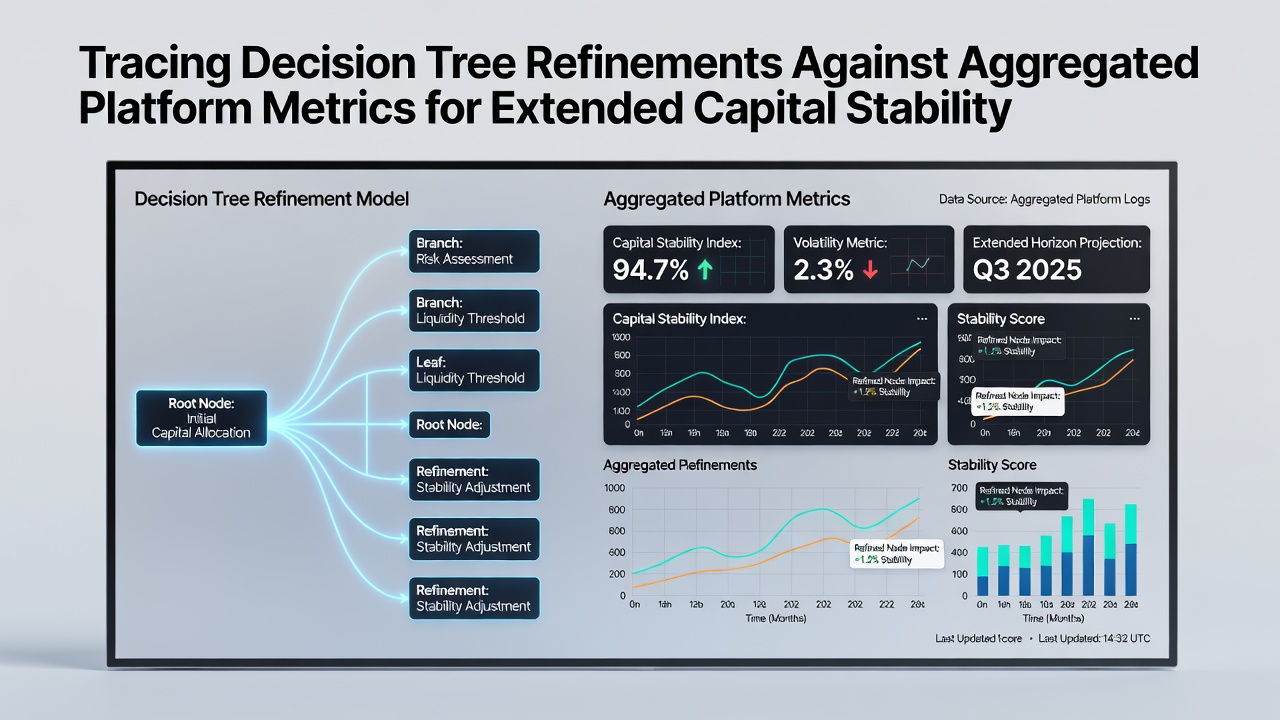
The integration step often employs automated pipelines that flag nodes whose error rates exceed preset tolerances when tested on the latest aggregates, and teams then examine those nodes manually to determine whether the discrepancy stems from changing market conditions or from earlier assumptions about user segmentation. Data from the Bank of Canada released in mid-2026 illustrated how seasonal shifts in retail deposit patterns altered the performance of trees that had been calibrated on 2024 and 2025 figures, leading operators to introduce additional leaf-level constraints tied to calendar-based metric subsets.
Observing Outcomes Across Multiple Reporting Periods
Extended capital stability emerges when refined trees consistently produce projections that align with actual reserve levels across successive reporting windows, and organizations track this alignment through backtesting routines that compare forecasted capital needs against realized figures drawn from the same aggregated sources. European Central Bank publications from the first half of 2026 noted that institutions applying quarterly metric refreshes reduced variance between projected and actual capital ratios by measurable margins compared with those using static models.
One documented workflow involves mapping each refinement round to specific metric categories such as average session duration, deposit-to-withdrawal ratios, and geographic concentration indices, then logging whether adjustments improved or degraded forward-looking accuracy. Observers note that trees incorporating multi-region aggregates tend to exhibit greater robustness during localized disruptions because the broader dataset dampens the influence of any single market anomaly.
Conclusion
Tracing refinements against aggregated platform metrics supplies a structured method for maintaining decision tree relevance over extended time horizons, and organizations that embed regular validation steps within their capital oversight routines obtain clearer signals about where model updates are required. Continued releases of standardized metric sets from regulatory bodies and industry consortia are expected to support further calibration efforts through 2027 and beyond.