Time Zone Shifts Driving Activity Peaks Across Worldwide Poker Platforms

Global poker networks operate around the clock yet player volumes spike and dip according to overlapping time zones from major markets in North America, Europe, Asia and Australia. Data indicates that these geographic spreads create distinct windows when tables fill quickly while other periods see thinner fields and longer waits for suitable games.
Core Patterns in Player Distribution
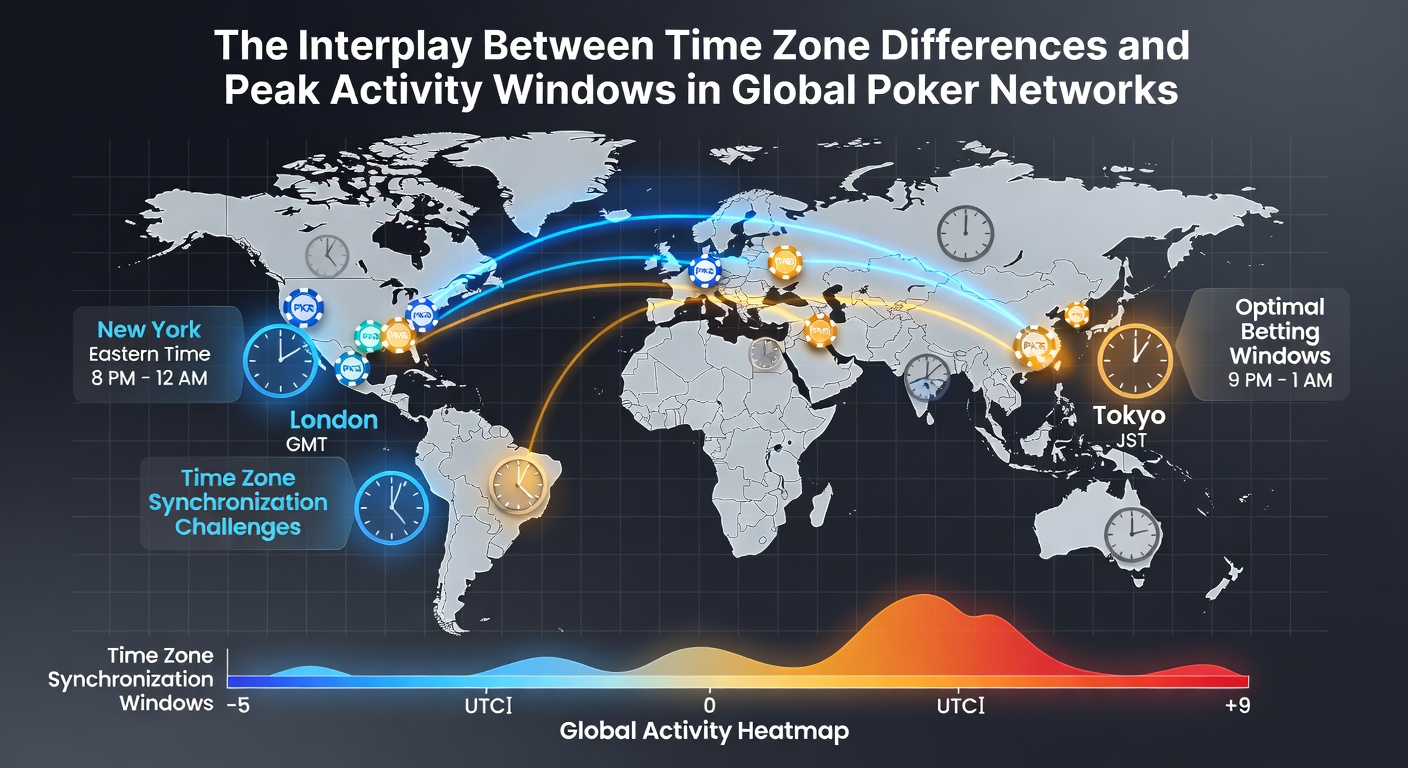
Observers tracking network logs note that European players generate strong evening activity from roughly 6 PM to midnight CET while North American participants peak later from 8 PM to 2 AM EST and this overlap produces the busiest multi-table tournaments and cash game sessions across major sites. Asian time zones add another layer because players in China, Japan and South Korea often log in during their morning and early afternoon hours which coincide with late night in the Americas.
Researchers compiling aggregated traffic statistics from 2025 through early 2026 found consistent surges when Australian Eastern Standard Time overlaps with early evening slots on the US west coast. Those who've studied these cycles report that networks adjust server loads and tournament schedules to capture these cross-continental convergences.
Impact on Tournament Scheduling and Cash Game Availability
Network operators align major events with these high-density periods because registration numbers climb sharply when multiple regions come online simultaneously. For instance May 2026 saw several flagship Sunday tournaments draw record fields precisely because European late afternoon aligned with US east coast morning and Australian evening creating a rare triple overlap.
Cash game traffic follows similar rhythms yet low-stakes tables remain populated longer into off-peak hours while high-stakes games concentrate almost exclusively during the prime windows. Figures from industry monitoring services reveal that wait times for heads-up or six-max tables can stretch from minutes to over an hour once the main activity windows close.
Regional Regulatory Context and Data Sources
Regulatory bodies in different jurisdictions collect usage data that helps map these patterns. According to reports issued by the New Jersey Division of Gaming Enforcement online poker volumes in the Garden State follow clear evening peaks that mesh with broader Atlantic time zone trends. Meanwhile the Australian Communications and Media Authority publishes quarterly summaries showing how local players contribute to overnight surges on international networks when their daytime aligns with European evenings.
Player Adaptation Strategies and Network Responses
Many participants adjust their own schedules to chase optimal liquidity and this behavior reinforces the existing peaks. Data shows that grinders who switch between sites often migrate toward rooms hosting the largest guaranteed prize pools during their local evening hours. Networks respond by rotating promotions and satellite qualifiers so that each region receives targeted incentives during its secondary activity windows.
One study released by the University of Nevada Reno Gaming Research Center examined server logs from multiple operators and confirmed that simultaneous multi-time-zone events reduce average seat vacancy rates by up to 40 percent compared with single-region offerings. Those findings prompted several platforms to experiment with staggered start times that capture secondary overlaps without cannibalizing primary traffic.
Future Outlook Based on Current Trends
Continued growth in emerging markets such as Latin America and Southeast Asia is expected to introduce additional activity layers. Preliminary traffic models project new convergence points once these regions reach critical mass and network planners already test dynamic scheduling algorithms that respond to real-time player density signals rather than fixed calendars.
Observers note that mobile connectivity improvements further blur traditional boundaries because players can participate from travel zones or during commutes extending viable windows beyond home time-zone constraints.
Conclusion
Time zone differences continue to dictate when global poker networks experience their strongest activity because player availability remains anchored to local clocks. Networks that map these overlaps accurately maintain steadier traffic and higher table utilization across cash games and tournaments alike while those that ignore geographic rhythms encounter predictable lulls. Ongoing data collection from regulatory agencies and academic researchers supplies the metrics operators need to refine scheduling and keep liquidity balanced throughout every 24-hour cycle.