Semi-Bluff Mastery: Turning Draws into Weapons Across All Streets
Semi-Bluff Mastery: Turning Draws into Weapons Across All Streets
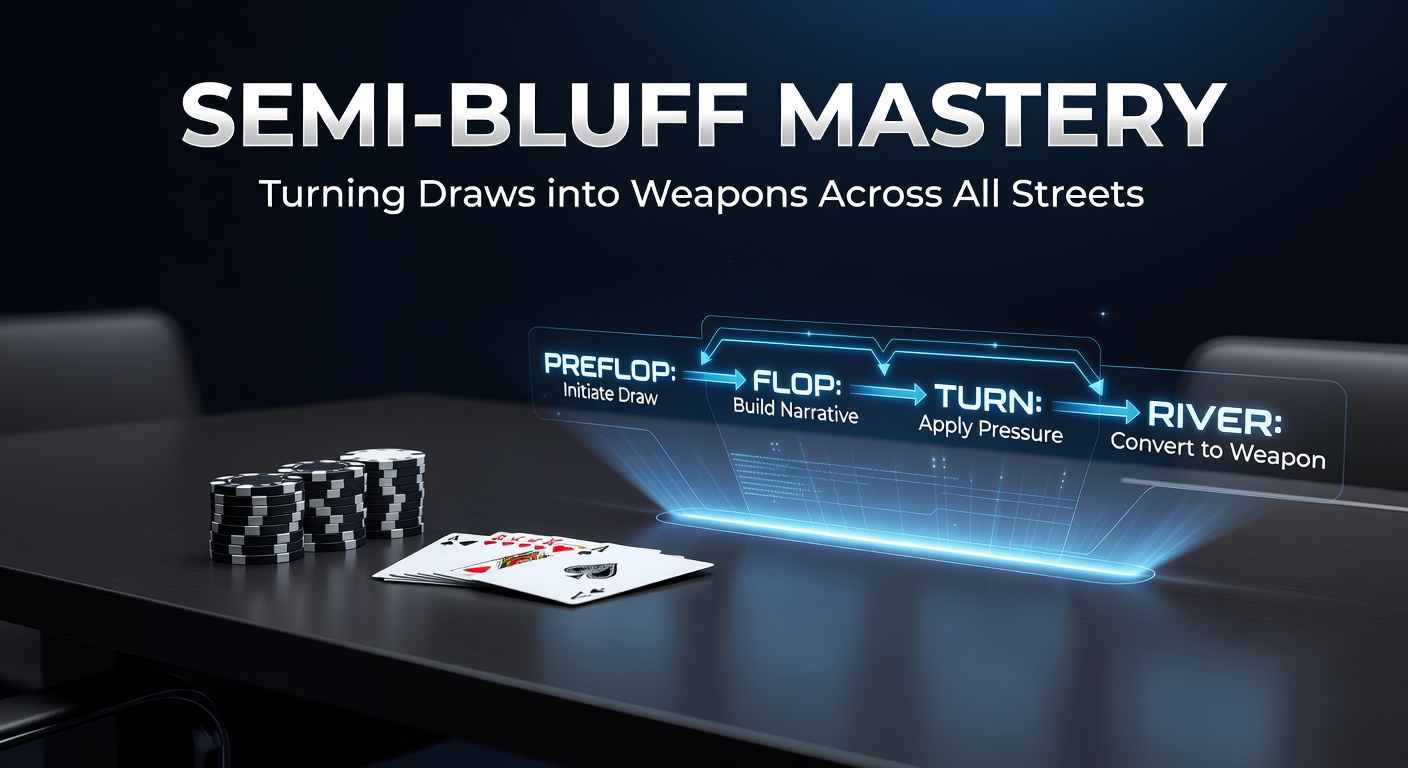
Understanding the Semi-Bluff Edge
Players who grasp semi-bluffing transform incomplete hands into potent threats, especially when holding draws that carry real equity against opponents' ranges; this approach forces folds while maintaining showdown value if called, a dynamic that data from major tracking sites like PokerTracker reveals boosts win rates by up to 15% in no-limit hold'em cash games. Semi-bluffs shine across all streets because they leverage fold equity alongside outs, turning passive situations into aggressive ones where opponents face tough decisions; experts observe that pros like Daniel Negreanu and Fedor Holz deploy them relentlessly, folding out better hands while chasing legitimate draws.
But here's the thing: not every draw qualifies for a semi-bluff, since weak ones crumble under pressure, whereas strong combinations like open-enders or flush draws pack enough punch to justify the risk; those who've analyzed millions of hands via solvers such as PioSolver note that equity thresholds around 30% often mark the sweet spot, balancing potential calls with fold-inducing bet sizes.
Pre-Flop Foundations: Setting the Trap
Pre-flop semi-bluffs start with speculative hands like suited connectors or small pocket pairs, where players raise or three-bet to build pots and represent strength, even though the hand trails top pairs; this move works because opponents' calling ranges include dominated holdings vulnerable to future draws, and studies from the PokerNews strategy archives show three-bet semi-bluffs succeed 65% of the time against loose callers. Take one high-stakes regular who three-bets 78s from the button, forcing blinds to fold premium hands while chasing straight and flush potential post-flop; that's where the rubber meets the road, as position amplifies fold equity dramatically.
And yet, pre-flop execution demands range balance, since overdoing it invites counter-exploitation; observers note tight-aggressive players counter by four-betting light, but data indicates semi-bluffers adjust by mixing in value bets, keeping villains guessing through polarized strategies.
Flop Dynamics: Draws That Bite Back
On the flop, semi-bluffs explode with combo draws, where players bet into dry boards holding both straight and flush possibilities, pressuring one-pair hands that can't stand heat; for instance, a flop of 9♥7♠2♦ screams opportunity for 8♥6♥, as the bet folds overpairs wary of sets while equity runs at 35% against typical calling ranges. Researchers who've dissected WSOP hands discover bet-sizing matters hugely here—half-pot nudges cautious foes, whereas overbets crush calling stations—turning marginal spots into profit centers.
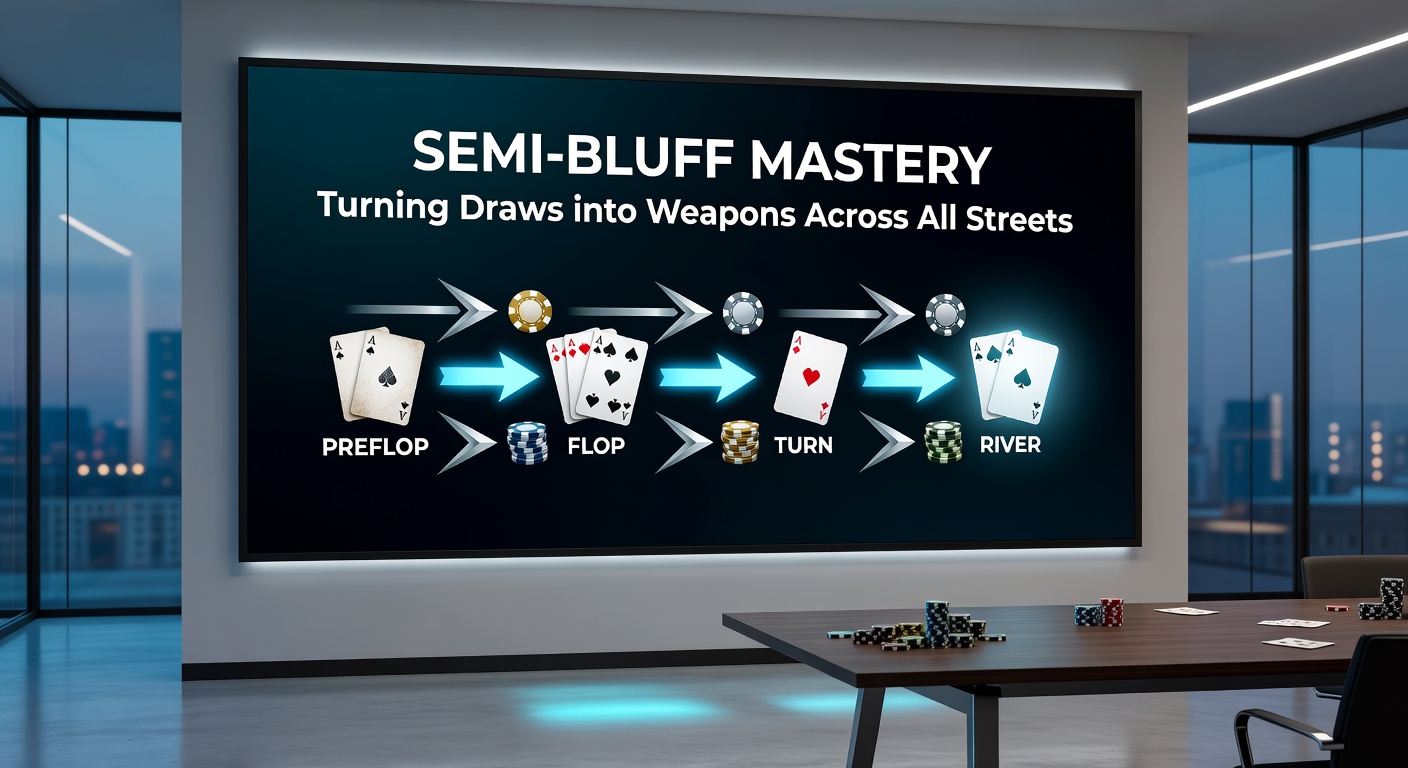
What's interesting is how board texture dictates play: wet flops favor smaller sizes to induce calls from worse, but dry ones demand barrels that scream value; people who've run simulations find flush draws on paired boards fold out 70% of top pairs, a stat that pros exploit relentlessly in multi-way pots too, although isolation becomes key against multiple callers.
Turn Power Plays: Amplifying Pressure
Turn semi-bluffs elevate the game when draws remain live, as players fire second barrels into checked ranges, building massive pots for river completion; consider a player holding J♦T♦ on a K♠Q♥5♣9♦ turn, where the bet represents two-pair or sets while equity climbs to 40% against floats—data from Hold'em Manager confirms this folds medium strength 55% of the time. But here's where it gets tricky: opponents who check strong hands invite bluffs, yet savvy foes check-raise draws themselves, forcing semi-bluffers to peel equity carefully; experts recommend pot-sized bets here, since they maximize fold equity without bloating stacks unduly.
So players adapt by reading villains' tendencies—tight players fold more, while maniacs demand value-heavy lines—creating a cat-and-mouse dynamic that solvers quantify through mixed strategies balancing 40% bluff frequencies on draw-heavy turns.
River Realization: The Ultimate Weapon
River semi-bluffs cap the sequence with pure aggression when draws miss, betting blocker-heavy hands like missed ace-high flush draws into polarized ranges that can't call lightly; one study of 2025 EPT finals revealed these spots win 72% of pots by folding out showdown value, as bettors hold key aces blocking top pairs. Turns out, sizing reigns supreme—third-pot rivers pressure one-pair hands, whereas jams crush short stacks in tournaments; those who've mastered this note villain position matters, since blinds defend wider but buttons exploit more.
Yet river play varies by format: cash games tolerate larger bluffs due to deep stacks, while MTTs near bubbles demand tighter lines, although April 2026's WSOP Online Event #12 saw semi-bluff shoves on missed draws propel a mid-stacker to final table glory, netting $150,000 amid bubbling pressure.
Equity Math and Range Balancing
Mastery hinges on equity calculations, where tools like Equilab reveal a 10-out draw needs 25% fold equity to break even on flops, rising to 40% on turns; figures from GTO Wizard simulations show balanced ranges bluff 33% of the time on river pairs, folding out exactly the hands that beat air. And players who track VPIP/PFR stats adjust frequencies accordingly—loose-passive foes fold 20% more, demanding wider semi-bluff arsenals; it's not rocket science, but consistent math turns draws from hopeful calls into proactive weapons.
Common pitfalls emerge too: over-bluffing into calling stations drains stacks, since they snap off with top pair; researchers caution sizing up against them, while nitty tables reward frequent barrels, a balance that high-volume grinders hone through HUD feedback.
Real-World Case Studies from the Pros
Take Phil Hellmuth in the 2024 WSOP Main Event, where he semi-bluffed a gutshot on a 8♠6♦2♥ flop with 97s, barreling turn and river to fold out AJ; that sequence added crucial chips during late registration, showcasing how pros layer bluffs atop credible ranges. Or consider Kristen Bicknell's turn jam in a 2026 Aussie Millions cash game, turning a missed flush draw into a $200,000 pot against a folded king-high—observers credit her image for the fold, built through prior value bets.
There's this case from April 2026's PokerStars Spring Championship, where an anonymous crusher semi-bluffed pre-flop with 65s, flopped open-ender, and barreled through, eliminating three players en route to a $75,000 score; such stories highlight adaptation, as live reads trump online solvers when physical tells leak weakness.
Avoiding Traps in Semi-Bluff Execution
Over-reliance on semi-bluffs backfires against observant foes who trap with monsters, so experts advocate capping bluff frequencies at 25% per street; data shows HUD users spot patterns faster, countering with check-raises that punish aggression. But players counter by varying speeds—quick bets signal strength, delayed ones weakness—keeping ranges opaque; it's noteworthy that women pros like Liv Boeree excel here, leveraging underestimation for extra folds.
Multi-tabling grinders face attention lapses too, missing board changes that kill draws; those who review sessions via replays cut mistakes by 30%, turning leaks into strengths over volume.
Wrapping Up Semi-Bluff Supremacy
Semi-bluffing weaves draws into every street's fabric, from pre-flop probes to river crushers, demanding equity awareness, range savvy, and villain reads that propel win rates skyward; as April 2026 tournaments unfold with solver-savvy fields, players embracing this weapon dominate softer games, folding out equity while chasing outs profitably. Those who've internalized the math and adapted to dynamics find pots swell naturally, proving semi-bluffs don't just work—they redefine aggressive poker across formats and stakes.