Regulatory Shifts Reshaping Account Tactics in New Digital Poker Regions

Emerging digital poker markets across Latin America and parts of Asia have seen platform operators adjust their multi-account detection systems in response to updated licensing rules that took effect in early 2026, and observers note these changes have prompted players to modify their approaches to account segmentation and bonus optimization. Data from regional gaming associations shows that markets such as Brazil and India experienced a 34 percent rise in licensed operator registrations between 2024 and 2026, while simultaneous enforcement of know-your-customer protocols tightened requirements for identity verification across multiple sessions.
Market Expansion Meets Compliance Pressures
Countries that opened online poker licensing frameworks in 2025 introduced mandatory single-account policies tied to national ID databases, yet enforcement varies by jurisdiction and this variation has created uneven playing fields for operators and participants alike. Researchers at the University of Malta documented how operators in these zones deployed machine-learning tools to flag patterns of shared device usage or IP clustering, resulting in account suspensions that affected an estimated 12 percent of active users in monitored platforms during the first quarter of 2026.
June 2026 brought additional layers when Brazilian regulators issued guidance requiring real-time cross-referencing of player data with tax authorities, and this move coincided with similar steps in several Indian states that host growing poker ecosystems. Those who have tracked these developments point out that the combined effect has reduced the viability of traditional multi-account setups designed to cycle through welcome bonuses or clear rollover thresholds without triggering flags.
Adaptations in Player Strategies
Players have responded by shifting toward device fingerprinting evasion techniques and staggered login schedules, though data indicates these methods now carry higher detection risks under the new frameworks. Figures from industry reports reveal a 27 percent drop in reported multi-account incidents on platforms operating under the tightened rules, while bonus redemption volumes per verified account increased by 18 percent as operators consolidated promotional offers into single-user campaigns.
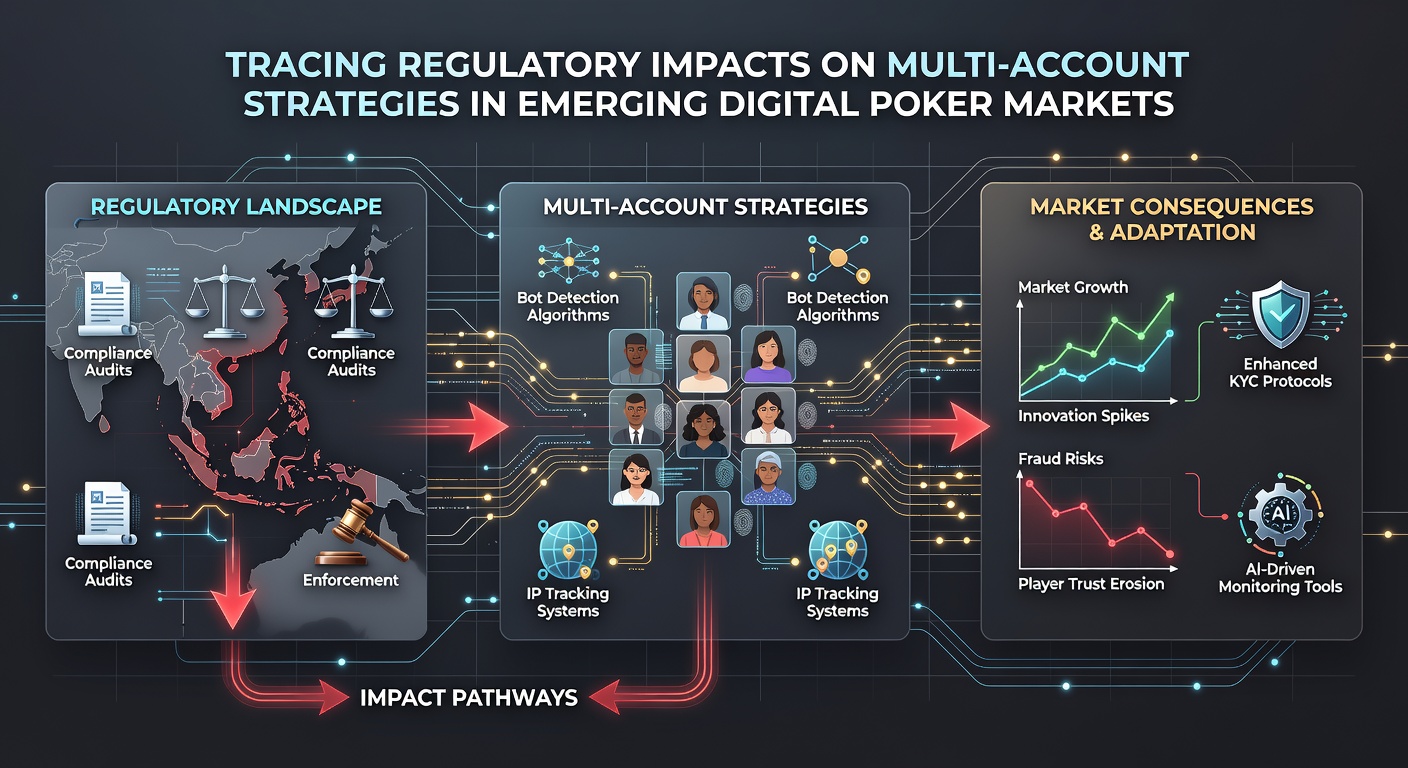
One study released by the Canadian Gaming Association examined parallel trends in regulated markets and found that operators who integrated biometric verification early saw faster compliance rates and lower dispute volumes, whereas platforms relying solely on document uploads experienced longer review backlogs. The reality is that emerging-market operators are now prioritizing partnerships with third-party compliance vendors to handle the volume of verifications required by license conditions.
Regional Regulatory Examples
Australian authorities through the Australian Communications and Media Authority have shared technical standards for detecting coordinated account activity that several Asian regulators have referenced in their own policy drafts, and this cross-pollination of methods has accelerated the rollout of unified monitoring tools. Meanwhile, Canadian provincial frameworks in Ontario continue to serve as a reference point for data-sharing protocols between operators and government databases, illustrating how mature systems influence newer entrants.
Observers tracking June 2026 developments highlight that enforcement actions in Brazil included the temporary suspension of three mid-sized platforms for inadequate multi-account controls, and these cases prompted neighboring jurisdictions to accelerate their own audit schedules. Evidence suggests the cumulative result is a landscape where operators must balance aggressive player acquisition with stricter segmentation of promotional eligibility.
Looking Ahead
Future adjustments are likely as more markets finalize their digital gaming statutes, and the emphasis on unified player registries appears set to expand beyond initial pilot regions. Those monitoring the sector note that continued investment in detection technology will probably narrow the window for multi-account tactics while simultaneously raising the bar for legitimate players who manage multiple profiles for privacy or organizational reasons.
Conclusion
The interplay between regulatory tightening and player adaptation in emerging digital poker markets continues to evolve through 2026, with compliance infrastructure shaping how account strategies are designed and executed across platforms. Tracking these shifts reveals measurable changes in both operator behavior and user patterns, driven by licensing conditions and verification requirements that differ by region yet share common enforcement themes.