Positional Play Evolutions Revealed Through High-Volume Online Cash Game Analysis
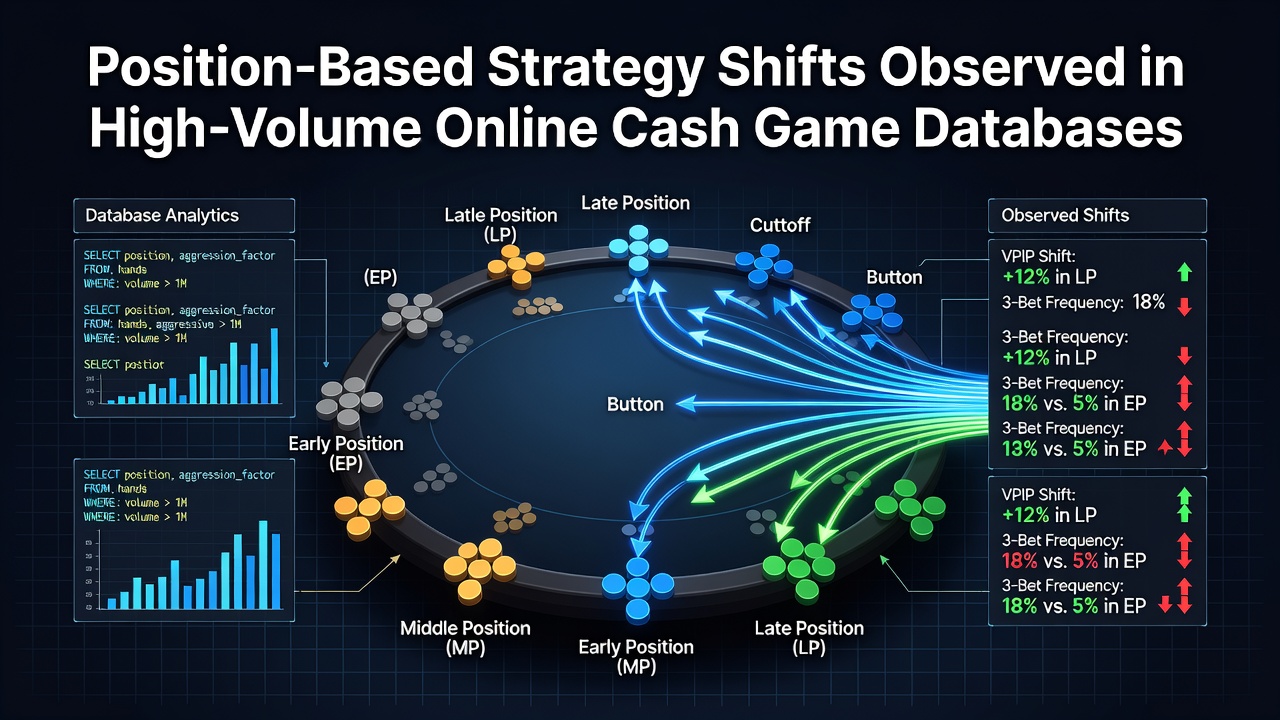
High-volume online cash game databases have provided researchers with extensive records that track how players adjust their approaches according to seat position, and these datasets continue to expand as platforms accumulate hands from millions of sessions each month.
Analyses of these collections indicate that early position play tends to feature tighter ranges and more cautious postflop decisions while late position strategies often incorporate wider starting hands along with increased aggression on later streets, patterns that hold across stakes from micro to high limits.
Database Scale and Collection Practices
Companies that aggregate hand histories report processing upwards of several billion hands annually from cash game formats alone, and these repositories allow for granular breakdowns by position, stack depth, and opponent tendencies; as of June 2026 several major tracking services have updated their dashboards to include real-time filters for positional metrics across thousands of tables simultaneously.
Observers note that the sheer volume permits identification of subtle shifts that smaller samples would miss, such as changes in continuation bet frequency when players move from under the gun to the cutoff over successive months of play.
Key Trends in Early Versus Late Position
Data from aggregated records shows that raise-first-in percentages from the button have climbed steadily in many player pools while those same figures from the first three seats remain comparatively stable, and this divergence appears linked to adjustments in three-bet defense and steal attempt sizing that databases capture through hand review tools.
Studies of positional outcomes further reveal that big blind defend rates have increased in recent years yet win rates from that seat stay negative on average because players in later positions exploit the wider calling ranges with targeted barreling sequences.
Stack Depth Influences on Positional Decisions
Deeper stacks correlate with more complex postflop lines from every seat, yet the effect registers most clearly in late position where players leverage implied odds through delayed continuation bets and check-raises; shallower stacks produce more preflop all-in situations regardless of position though the frequency still varies measurably between early and late seats according to aggregated figures.

One research project that examined over 50 million hands found that 100 big blind effective stacks produced roughly 12 percent more river bets from the cutoff than from under the gun while 40 big blind stacks narrowed that gap considerably because shorter depths limit the room for multi-street maneuvers.
Regional and Stake-Level Variations
Records drawn from North American facing rooms show slightly different positional aggression profiles compared with European and Asian pools, and these distinctions persist even after controlling for game type and time of day; regulatory reports from bodies such as the British Columbia Gaming Policy and Enforcement Branch document overall volume trends that align with these database observations though they focus more on player protection metrics than tactical details.
Within individual stake levels the patterns repeat at scale: micro stakes players exhibit the widest positional disparities in preflop raise rates while nosebleed games display tighter overall ranges yet retain measurable late position advantages in postflop aggression metrics.
Temporal Shifts Documented in Longitudinal Data
Long-term tracking of the same player cohorts demonstrates that individuals often tighten their early position ranges over time while expanding late position activity, a progression that databases link to accumulated experience and exposure to solver outputs rather than to any single rule change or promotion.
Figures reveal these adjustments accelerate during periods of higher traffic such as holiday seasons when recreational participation rises and regulars adapt by increasing positional selectivity.
Conclusion
High-volume cash game databases continue to supply detailed evidence of how position shapes strategy at every level of play, and the patterns extracted from these records inform both individual study routines and broader industry understandings of game evolution; ongoing collection efforts ensure that future analyses will capture additional refinements as player pools and platform features develop.