Circadian Patterns Shape Accuracy Levels in Extended Multi-Table Poker Engagements

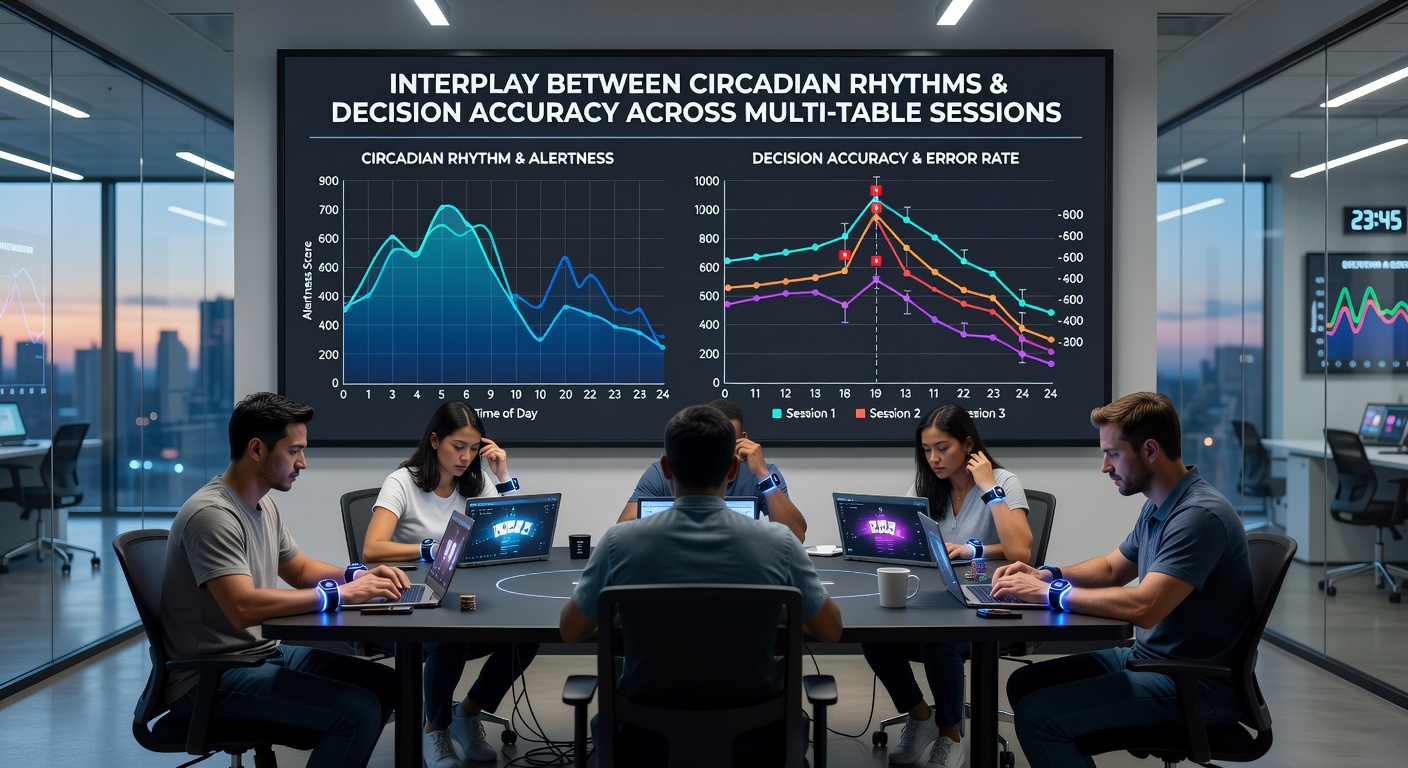
Body clocks regulate alertness, attention, and cognitive processing through predictable daily cycles, and these rhythms intersect directly with the demands of managing several poker tables at once over long periods. Researchers have tracked how core body temperature, hormone levels, and neural activity shift across 24-hour spans, creating windows of peak performance followed by dips that affect reaction times and risk assessment. In online poker environments where sessions often stretch from evening into early morning hours, these biological shifts become measurable factors in hand selection, bet sizing, and fold decisions.
Daily Rhythms and Cognitive Performance Metrics
Studies conducted by teams at the University of Melbourne reveal that peak cognitive accuracy tends to align with an individual's natural alertness phase, typically occurring mid-morning to early afternoon for most adults. During these windows, participants demonstrate faster information processing and fewer errors when evaluating complex scenarios involving probabilities and opponent modeling. Conversely, performance declines become evident during the biological night, when melatonin rises and core temperature drops, leading to slower responses and increased susceptibility to impulsive choices.
Data collected across multiple time zones shows consistent patterns: players who begin sessions during their circadian troughs record higher rates of deviation from established strategy benchmarks. These deviations appear in post-session reviews as miscalculated pot odds or overlooked positional advantages rather than outright mistakes in basic rules.
Application to Simultaneous Table Management
Multi-table formats amplify the effects because attention must divide across independent decision points arriving at irregular intervals. Observers note that when sessions cross from afternoon into evening, accuracy metrics drop more sharply than in single-table settings, since divided focus compounds any underlying fatigue. Canadian research groups tracking player telemetry have documented that error frequency rises by measurable percentages after six consecutive hours, with steeper increases during late-night blocks.
One analysis of aggregated platform data from North American operators found that decision latency lengthens progressively after midnight local time, correlating with reduced win rates in high-volume formats. The same datasets indicate that players who schedule breaks aligned with personal circadian dips maintain steadier performance curves across 10-plus hour stretches.
What's interesting emerges when comparing results from different regions: Australian participants showed distinct phase shifts compared with European cohorts, reflecting varying daylight exposure and social schedules. These geographic differences underscore that individual chronotype, whether morning-oriented or evening-oriented, interacts with session timing to influence outcomes.
Observed Patterns in June 2026 Platform Activity
Platform reports from the first half of 2026, including activity spikes noted during early June, continue to reflect these established biological rhythms rather than isolated events. Traffic volumes peak during evening hours in major markets, yet post-session accuracy reviews reveal consistent declines among users extending play past their typical bedtime. Industry organizations such as the European Gaming and Betting Association have compiled session-length statistics that align with laboratory findings on sustained attention, showing parallel drops in decision quality metrics.
Academic sources, including work published through the National Institutes of Health, link these observations to broader sleep-wake homeostasis models. Players who maintain consistent sleep schedules demonstrate smaller variance in accuracy across multi-table runs, while those with irregular patterns exhibit wider fluctuations even when total sleep hours remain comparable.
Measurement Approaches and Supporting Evidence
Researchers employ actigraphy devices alongside poker tracking software to correlate real-time physiological markers with in-game actions. These combined datasets allow precise mapping of alertness levels against specific decisions such as continuation betting frequency or river call accuracy. Results indicate that accuracy remains relatively stable within the first four hours regardless of start time, after which divergence accelerates based on circadian phase.
Additional studies from institutions in Singapore have examined light exposure variables, noting that artificial lighting common in evening play environments can partially blunt natural melatonin onset yet fails to restore full daytime cognitive capacity. This partial mitigation explains why some extended sessions show moderate rather than catastrophic performance decay.
Conclusion
Evidence from multiple research streams demonstrates that circadian rhythms exert measurable influence on decision accuracy during prolonged multi-table poker activity. Timing of sessions relative to individual biological peaks and troughs correlates with observable differences in processing speed and error rates, while geographic and chronotype variations add further layers to the pattern. Continued collection of platform telemetry alongside physiological data promises clearer quantification of these interactions in coming periods.