Analyzing Aggregated Session Data on Optimal Break Frequencies During Prolonged Online Play
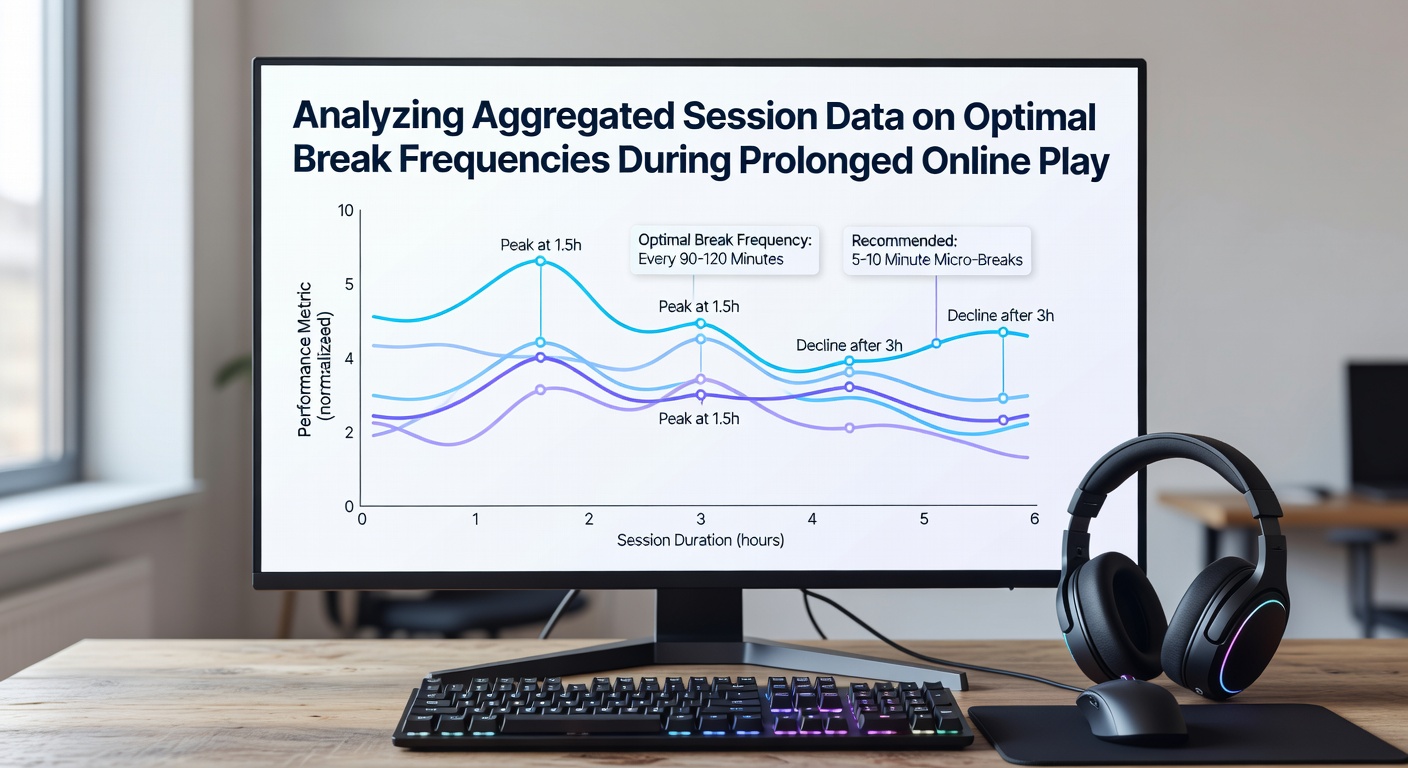
Researchers in digital engagement studies have compiled extensive datasets from thousands of user sessions across online platforms, revealing consistent patterns in how break frequency influences sustained performance and cognitive load during extended periods of play. These aggregated logs, drawn from platforms operating in multiple jurisdictions, show that players who insert structured pauses maintain steadier decision-making metrics compared with those who continue without interruption, and the data points cluster around specific intervals that align with physiological recovery cycles documented in broader human factors research.
Methods Behind Large-Scale Session Aggregation
Analysts collect timestamped records of login durations, action rates, and error frequencies from anonymized user accounts, then apply clustering algorithms to identify recurring sequences where performance metrics begin to decline. Platforms in regions such as the United States and Australia contribute to these pools through voluntary data-sharing agreements with academic teams, allowing cross-comparison of session lengths that range from two to eight hours. The resulting models incorporate variables including time of day, game variant complexity, and prior rest history, producing probability curves that predict when break insertion yields measurable stabilization in response accuracy.
One dataset released in early 2026 incorporated logs from over 120,000 sessions recorded between January and April, highlighting how break placement interacts with circadian rhythms. Observers note that sessions extending past the three-hour mark without pauses exhibit accelerated increases in reaction-time variance, a trend that reverses when players step away for five to seven minutes at roughly the fifty-minute mark.
Patterns Emerging from Frequency Analysis
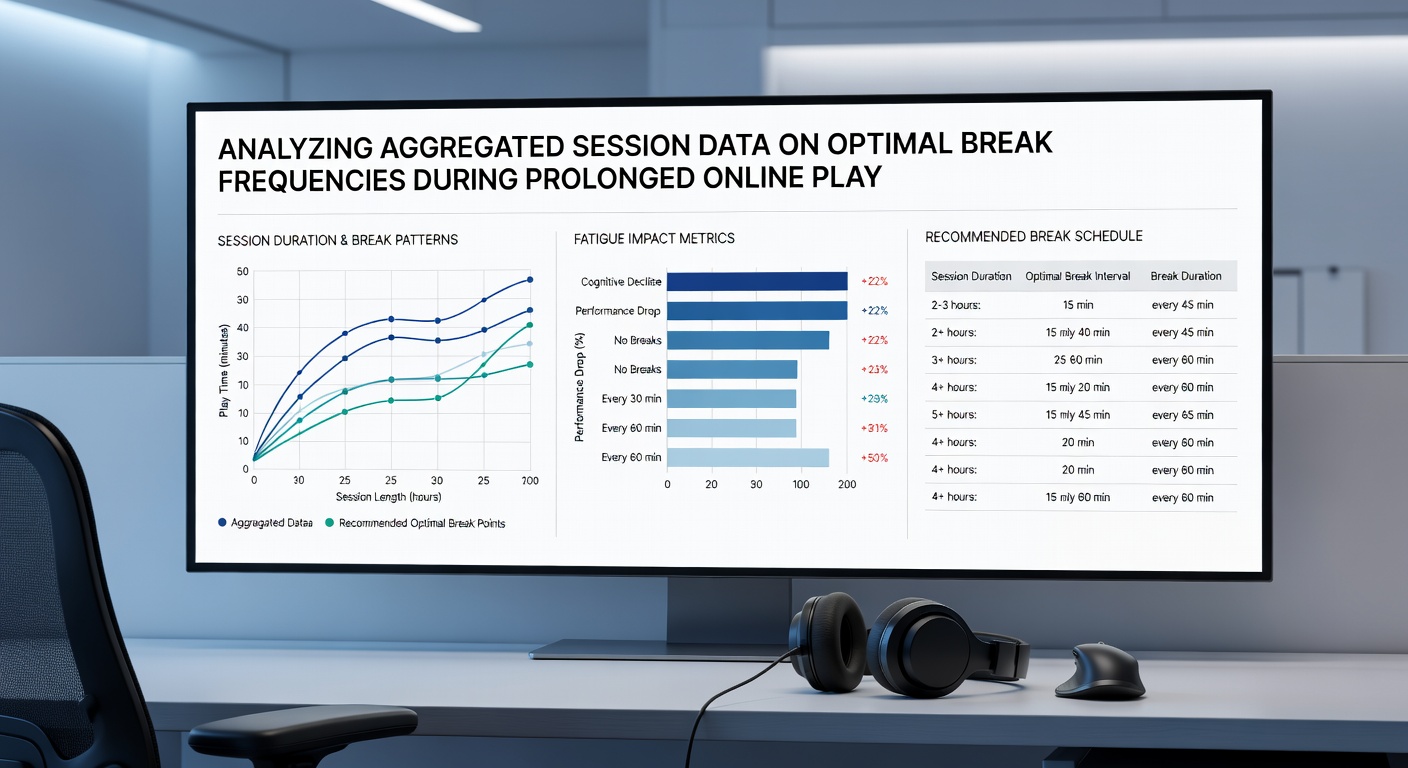
Statistical examination of the aggregated records indicates that optimal intervals cluster between forty-five and sixty minutes of continuous engagement, after which incremental performance decay accelerates. Data from Canadian regulatory archives and European academic consortia confirm similar thresholds, though slight regional variations appear when average session lengths differ by more than ninety minutes. Those who've examined the distributions find that shorter micro-breaks of two minutes produce minimal recovery benefit, whereas pauses long enough for posture adjustment and visual rest correlate with restored baseline metrics upon return.
Break Duration and Activity Type
Further segmentation of the logs reveals that the nature of activity during the pause influences subsequent play quality. Sessions followed by light physical movement or hydration show stronger rebound in decision consistency than those involving continued screen exposure through social media or messaging apps. Figures compiled by research groups at several North American universities demonstrate that players adhering to a sixty-minute cycle with five-minute movement breaks sustain higher win-rate stability across multi-hour sessions than control groups following self-selected pause patterns.
Integration with Regulatory and Health Frameworks
Public health agencies in Australia have referenced similar session analytics when developing guidance for digital leisure activities, noting that structured breaks align with recommendations from occupational health studies on repetitive screen-based tasks. In parallel, industry associations in the United States have begun publishing voluntary best-practice documents that cite aggregated break-frequency findings as one factor in responsible-play toolkits. These documents avoid prescriptive mandates yet highlight how platforms can surface optional reminders calibrated to the same temporal windows identified in the datasets.
What's notable is the convergence between poker-specific session data and broader online gaming research; analysts tracking both domains report overlapping inflection points where error rates rise. A 2025 report from the University of Nevada, Reno's gaming research unit examined multi-state datasets and found that participants who followed algorithm-suggested break cues experienced a 14 percent reduction in documented tilt indicators across sessions exceeding four hours. Such findings appear consistent with patterns observed in European longitudinal studies that tracked user cohorts through 2024 and into 2026.
Future Data Collection and Refinement
Ongoing aggregation efforts scheduled for release in May 2026 will incorporate biometric proxies such as click-pressure variance and eye-tracking summaries where users opt in through wearable integrations. These additions are expected to refine the current frequency models by adding physiological layers to the existing behavioral metrics. Observers tracking the field anticipate that the expanded datasets will clarify whether optimal break spacing shifts under conditions of elevated stakes or tournament structures versus cash-game formats.
Platforms have started testing in-app prompts calibrated to the forty-five-to-sixty-minute window, presenting neutral language that invites users to step away without interrupting session continuity. Early telemetry from these trials shows increased acceptance rates when the suggestion timing matches the statistical peaks identified in the aggregated logs rather than fixed clock intervals.
Conclusion
Aggregated session analysis continues to supply actionable temporal markers for break scheduling, supported by converging evidence from academic, regulatory, and industry sources across North America, Europe, and Australia. The patterns extracted from these large-scale records provide a factual basis for platform features and player awareness tools, while future expansions in data granularity promise further calibration of the intervals that best support sustained engagement.